What Is Voice Cloning? How It Works and Responsible Use
What is voice cloning? Voice cloning is the use of artificial intelligence to create a synthetic copy of a real person's voice from recorded audio samples. Once the model is trained, that cloned voice can read any text aloud in the person's tone, accent, and speaking style.
This guide explains how voice cloning works, how it differs from plain text-to-speech, and where it helps creators and teams. We also cover consent, safety, and the steps to clone a voice the right way.
At Hedra, we treat a cloned voice as one part of a larger job. A cloned voice earns its keep when it becomes finished media, so the real goal is a finished piece of media. We will show you where the clone fits and how to use it with permission.
What Is Voice Cloning? A Plain Definition
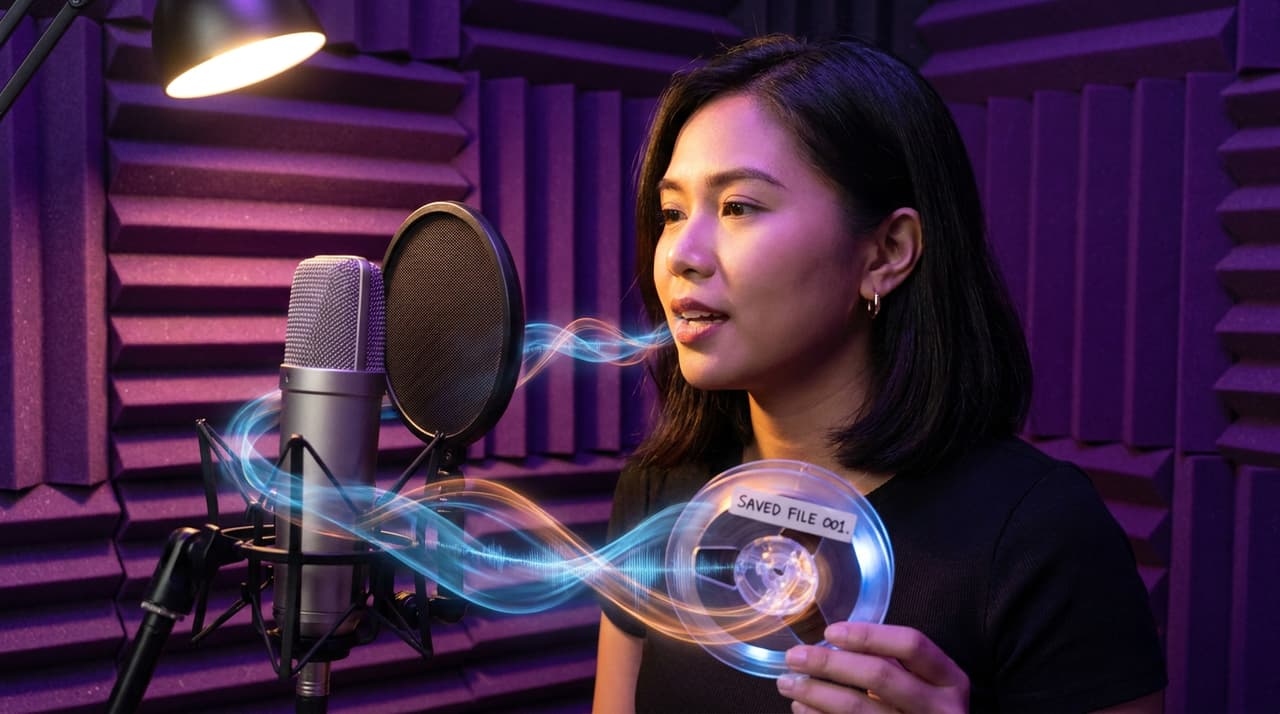
Voice cloning is a technology that builds a digital model of a specific human voice so a computer can speak new words in that voice. The model captures pitch, pace, accent, and tone from short audio samples (arXiv, 2018).
In simple terms, you give the system a recording of a voice, and it learns to produce fresh speech that sounds like the same person. The words can be anything you type, even words the person never recorded.
Voice cloning is also called voice synthesis or synthetic speech. It powers narration, virtual assistants, dubbing, and assistive communication devices.
The technology has improved quickly. Early systems needed hours of clean studio audio. Modern systems can adapt to a new speaker from a much smaller sample.
Voice Cloning vs. Text-to-Speech
People often mix up voice cloning and text-to-speech, but they solve different problems. Standard text-to-speech reads your words in a generic, pre-built voice that belongs to no real person.
Voice cloning goes further. It reproduces a specific, identifiable voice, so the speech carries that person's character rather than a stock narrator's.
The distinction matters for consent. A generic text-to-speech voice raises no permission question, while a cloned voice always should belong to you or to someone who agreed in writing to its use.
Factor | Text-to-Speech | Voice Cloning |
Voice source | Generic, pre-built voice | A specific real person's voice |
Input needed | Just your text | Audio samples plus your text |
Consent | Not tied to any individual | Requires the voice owner's permission |
Best for | Quick, neutral narration | A consistent, recognizable voice |
You can explore the basics on our voice cloning page.
How Voice Cloning Works
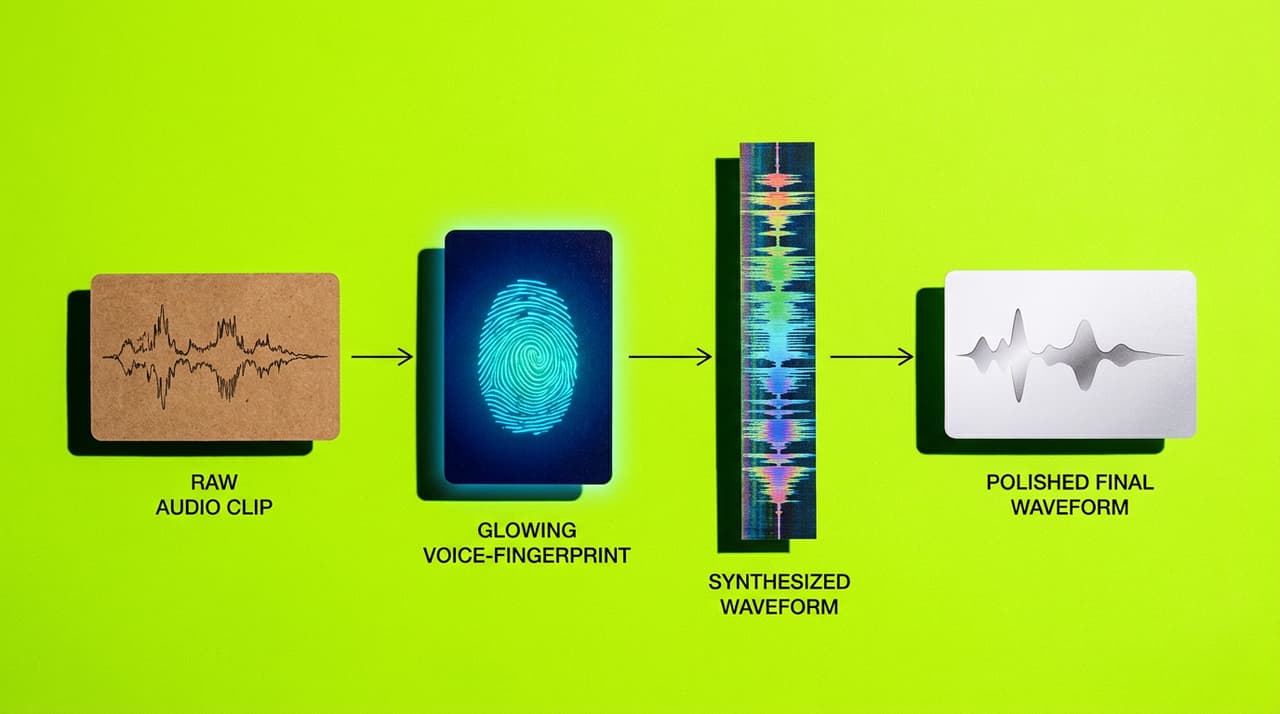
Voice cloning works by training a neural network on samples of a target voice, then using that model to generate new speech. Researchers train deep neural networks on recordings of a voice so the system can produce speech that resembles the original speaker (arXiv, 2018).
The process moves through four clear stages. Each stage shapes how natural the final voice sounds.
Step 1: Collect a Voice Sample
The system starts with audio of the target voice. The sample can be a few seconds for a quick clone or several minutes for a higher-quality result.
Clean audio matters more than length. Background noise, echo, and music make the model harder to train.
Step 2: Train or Adapt the Model
Next, the model studies the sample and builds a digital fingerprint of the voice. This fingerprint, often called a speaker embedding, captures the traits that make the voice unique.
Some systems train a fresh model for each voice. Others adapt a large pre-trained model to a new speaker from a small sample, which is faster.
Step 3: Synthesize Speech
Now the model can read text aloud. You type a sentence, and the system generates audio in the cloned voice.
This stage is called speech synthesis. The model predicts the sound wave one piece at a time until it forms full words and sentences.
Step 4: Refine the Output
Finally, the output gets reviewed and adjusted. You can tune pace, emphasis, and pauses so the speech sounds natural.
Better samples and clear text produce better results. Refinement closes the gap between a robotic read and a human one.
Where Consent Draws the Line
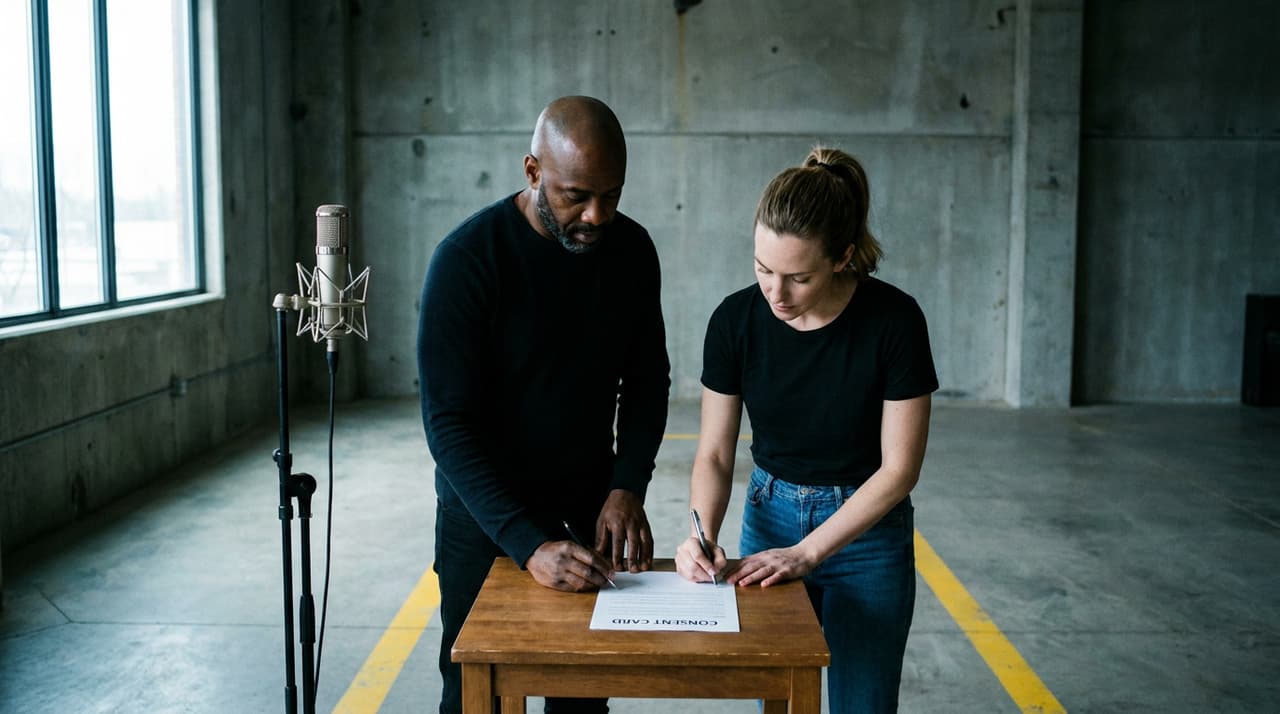
Voice cloning is a neutral tool, and consent is what keeps its use responsible. The same technology can narrate a training video for one team and harm someone if a voice is copied without permission, so the difference comes down to whether the voice owner agreed.
This is also where voice cloning gets confused with a deepfake. A deepfake is a video, photo, or audio recording that seems real but has been manipulated with AI, often without the subject's permission (GAO, 2020).
The table below shows what responsible practice looks like in plain terms.
Practice | What it means |
Consent | The voice owner agrees in writing before you clone the voice |
Purpose | Narration, dubbing, accessibility, and branded video |
Disclosure | The use of synthetic audio is clear to the audience |
Records | You keep proof of permission for each cloned voice |
When you clone voices you own or have written permission to use, you stay on the responsible side of this line. That is the stance we take at Hedra.
Legitimate Use Cases for Voice Cloning
Voice cloning has many lawful uses across content, localization, accessibility, and branded video. When the voice owner consents, the technology saves time and opens new options for teams of any size.
Content Creation
Creators use cloned voices to narrate videos, podcasts, and courses without re-recording every script. A small edit no longer means a full studio session.
Educators and designers use the same approach to keep a consistent narrator across a long series.
Localization and Dubbing
A cloned voice can speak many languages while keeping the original speaker's character. This helps brands reach new markets without hiring a separate voice actor for each one.
Accessibility
Voice cloning can help people with ALS preserve a familiar synthetic voice as speech changes. Voice banking records speech samples while a person can still speak clearly, then makes that voice available through assistive communication devices (peer-reviewed study, 2025).
This use case shows the human value of the technology. It restores a person's identity, not just their words.
Branded Video
A brand can give its videos one steady voice across many clips. Marketing teams pair a cloned narrator with text and visuals to ship campaigns faster.
This is where Hedra fits. With consent in hand, a cloned voice becomes one input, and a finished talking video is the output that creatives can actually publish.
How to Clone a Voice
To clone a voice, you record or upload a clean audio sample, train the model, generate speech from text, and refine the result. The quality of your sample drives the quality of your clone.
The Basic Steps
1. Get consent. Confirm you own the voice or have written permission to use it.
2. Record a clean sample. Use a quiet room and a decent microphone. Avoid music and background noise.
3. Upload and train. Feed the sample to your voice tool so it can build the voice model.
4. Generate speech. Type your script and produce audio in the cloned voice.
5. Refine. Adjust pace and emphasis, then review for accuracy.
What Affects Sample Quality
A few factors decide how natural your clone sounds. Keep these in mind before you record.
- Audio clarity. Less noise and echo mean a cleaner model.
- Consistent tone. Record in one steady speaking style.
- Enough material. A longer clean sample usually beats a short noisy one.
- Single speaker. Only the target voice should appear in the audio.
The next step is what most tools skip. After the clone, you still need a finished piece of media.
Where the Clone Becomes Finished Media
Most voice tools stop at the standalone clone. You get an audio file and then have to assemble the video yourself.
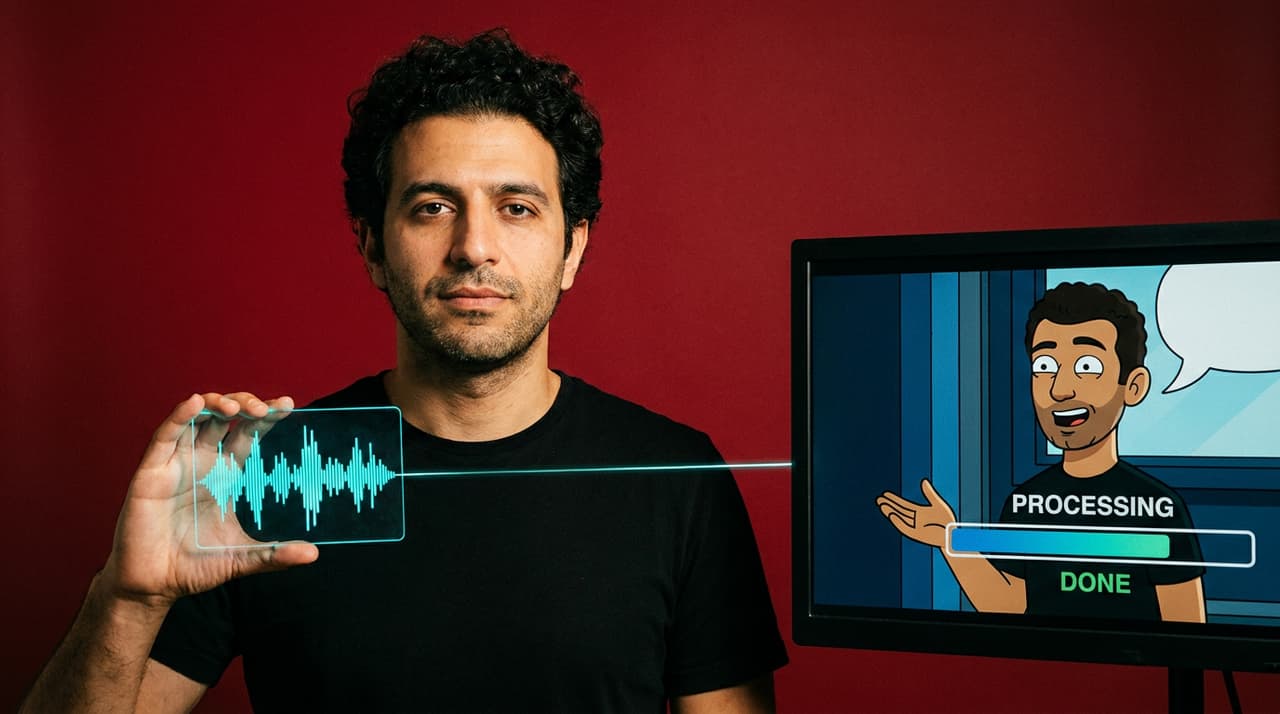
We built Hedra around the next step. Inside Hedra, the voice you choose comes from voice providers ElevenLabs and MiniMax, and our Hedra agent pairs that voice with your script and your visuals to produce a finished video in one workflow.
Pair a voice you have permission to use with your script and visuals in Hedra. Choose an audio-driven video model for presenter footage, or use the voice as narration over generated scenes. Review the timing and assemble the outputs into a finished video.
We are the only general agent that uses its research to create finished media. That means the cloned voice is one ingredient inside a complete branded video, and you can start from a single still using our talking photo workflow.
Safety: Voice Scams and Responsible Use
Voice cloning can be abused for scams, so consent-first use is the responsible standard. Criminals can clone a relative’s voice, pretend to be in trouble, and pressure family members to send money immediately (FTC, 2023).
The scale is large. The FTC received 845,806 imposter scam reports in 2024, with reported losses of nearly 3 billion dollars (FTC Consumer Sentinel Network Data Book, 2025).
The fix is simple. If you receive an urgent call from someone who sounds like a family member asking for money, hang up and call that person back at a number you already have saved.
Lawmakers are responding too. The proposed NO FAKES Act of 2025 would give each person the right to authorize use of their voice and likeness (NO FAKES Act of 2025).
The takeaway is steady. Clone voices you own or have clear permission to use, disclose synthetic audio, and keep records of consent. Responsible use protects both you and your audience.
Frequently Asked Questions
What is voice cloning in simple terms?
Voice cloning is a technology that uses artificial intelligence to copy a real person's voice from audio samples. Once the model is trained, it can speak any text you type in that person's tone and style.
Is voice cloning legal?
Voice cloning is legal when you have the right to use the voice, such as your own voice or a voice you have written permission to clone. Using someone's voice without consent can break right of publicity and fraud laws, and the proposed NO FAKES Act of 2025 would set federal consent rules (NO FAKES Act of 2025).
How much audio do you need to clone a voice?
Some systems can adapt to a new voice from a sample of only a few seconds, while higher-quality results often use several minutes of clean audio. Clean, single-speaker audio matters more than raw length.
What is the difference between voice cloning and text-to-speech?
Text-to-speech reads your words in a generic, pre-built voice that belongs to no real person. Voice cloning reproduces one specific person's voice from audio samples, so it carries that person's character and requires their consent.
How do I protect myself from voice cloning scams?
Treat urgent money requests with caution, even when the voice sounds familiar. The FTC advises that you hang up and call the person back at a number you already have saved.
Can voice cloning help people with disabilities?
Yes. Voice preservation lets people who are losing speech, such as those with ALS, keep a synthetic version of their own voice for communication devices.
Can I use a cloned voice to make a full video?
Yes. With Hedra, a cloned voice can become one input for a finished video. Combine it with your script and visuals, choose a video model that supports your inputs, and assemble the result in the same workflow.
Key Takeaways
- Voice cloning uses AI to copy a real voice from audio samples, then speaks new text in that voice.
- The process has four stages: collect a sample, train the model, synthesize speech, and refine the output.
- Consent draws the line. Clone voices you own or have written permission to use, and disclose synthetic audio to your audience.
- Voice cloning differs from text-to-speech because it reproduces one specific, identifiable voice rather than a generic one.
- At Hedra, a cloned voice is one step inside producing a finished branded video, not the finish line.
Hedra makes it possible. What will you create?