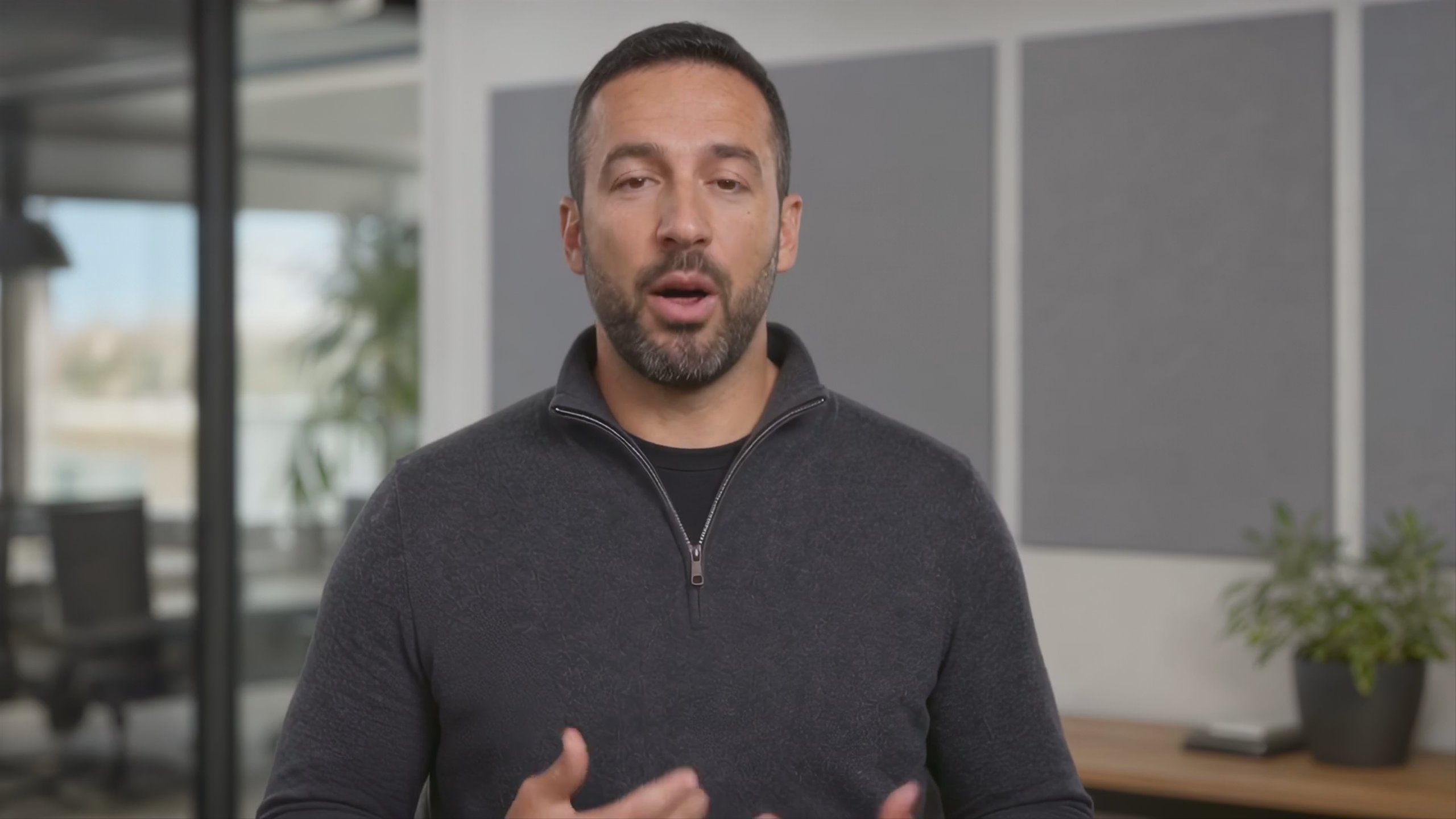
Sync a face to any audio with AI.
The mouth matches the recording instead of talking over it — so one take becomes every market, and a script change is a re-render rather than a reshoot. Send a face and a waveform; get a performance back.
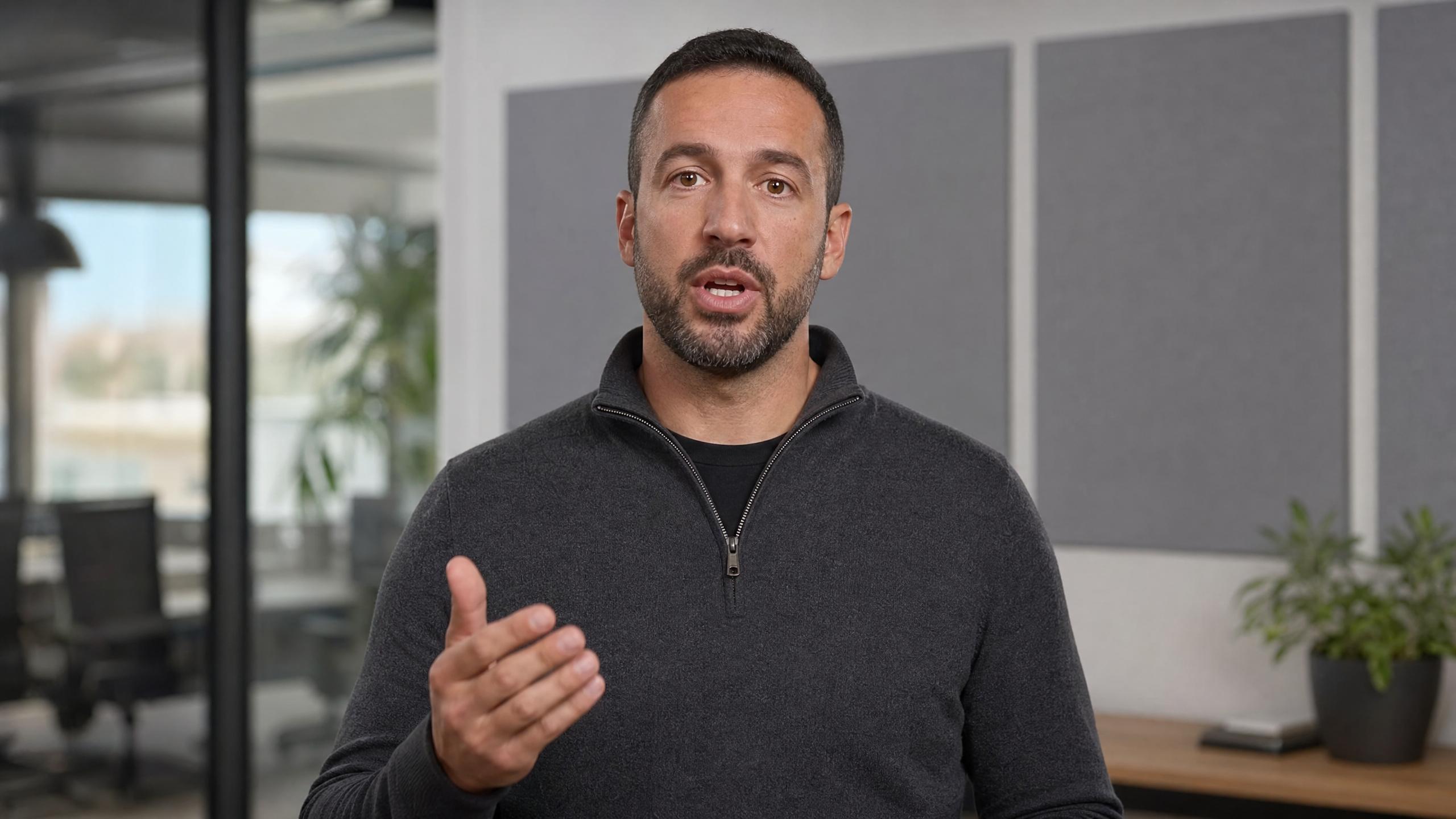
"You will only do this once a year. Which is exactly why you should learn it properly now."
One take, every language.
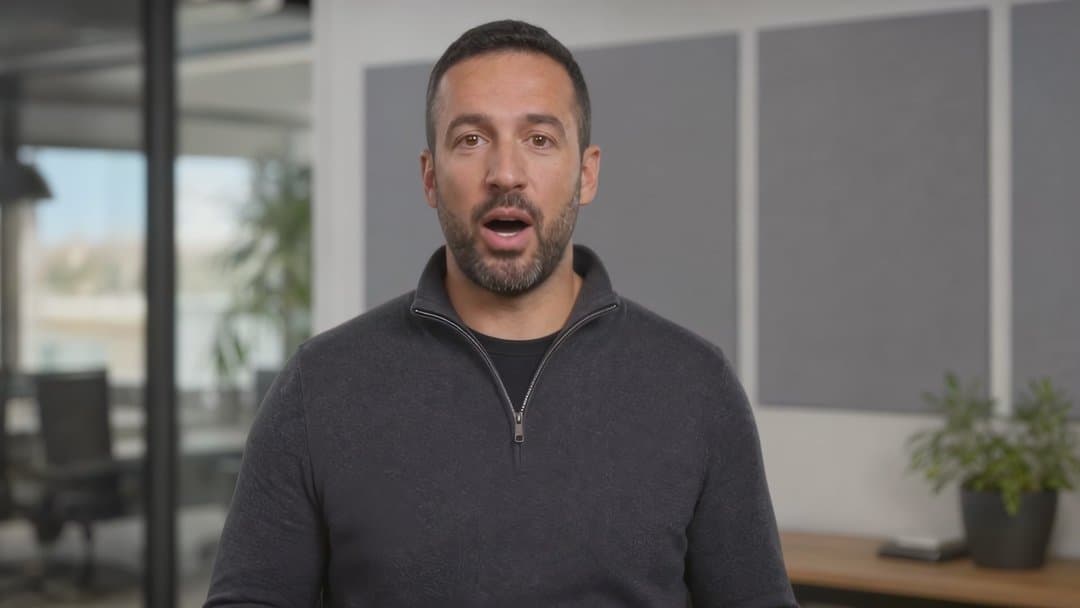
The mouth matches the market.
These are three frames from three finished takes at the same moment in the sentence — English, Japanese, German. Same presenter, same office, same source frame; three different shapes, because each mouth is answering a different recording. That is the difference a viewer notices without being able to say why.
Sync is not dubbing.
Dubbing lays a new voice over an old performance and hopes nobody looks at the mouth. Sync goes the other way: the recording is the authority, and the face is rebuilt to it — every stop, every held vowel, every place the sentence turns. Which is why a localized training video can stop looking localized.
The source is one frame.
Everything on this page came out of this single still. No second shoot for German, no third for Japanese, no studio time when legal rewrites a sentence — a new market is a new recording against the same frame, and the take runs exactly as long as that recording, up to ten minutes in one generation.
Every sync model, and every voice to drive it.
Built for visual inference.
Serving video is a different problem from serving text — a single request can saturate a GPU, and none of the tricks that made language models cheap apply. Hedra's engine was built for exactly that workload.
Whichever model you choose — ours or anyone else's — it runs on the same infrastructure, behind one key, priced per second of output. Which is what makes a twelve-market rollout a loop rather than a project: twelve recordings, twelve renders, one bill that follows the seconds.
Generate with API or Agent
Build with the API
One key, every model, priced per second of output. Point it at a face and a folder of recordings.
Sync one now.
No code — drop in the face, add the audio, export the take.
FAQs
A face and an audio file. The model reads the recording and rebuilds the mouth, jaw and expression to it — so the audio is the authority and the picture follows. Every take on this page was made from one still and one recording.