
Build a brand kit that the next thing you make obeys.
A palette in a PDF is decoration. What is worth having is a look that holds — so the ad, the packaging and the room all come back in the same two colours without being asked twice.
The bag on the left was made from a written description. Everything else on this page references it and nothing else. Switch across and check the green, the circle and the wordmark.
Two honest limits: small type in generated imagery is unreliable, so treat a generated wordmark as a placeholder and set real text over it — and the colour holds its hue rather than an exact value, because each asset is lit differently.
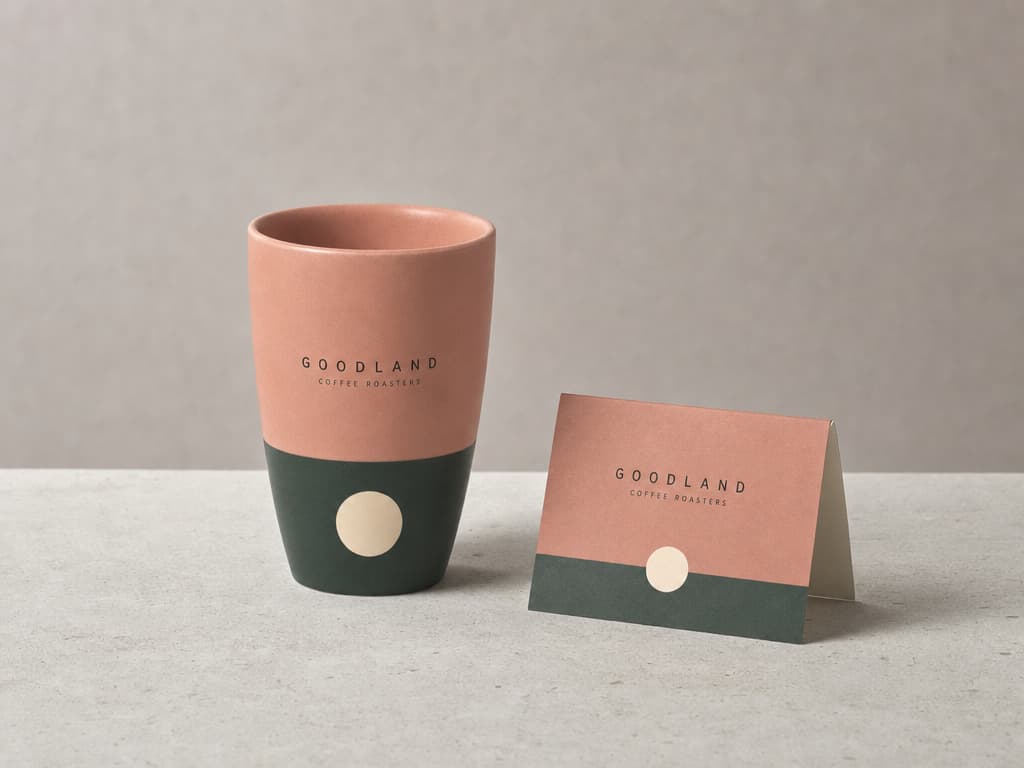
A kit is only worth having if it is enforced.
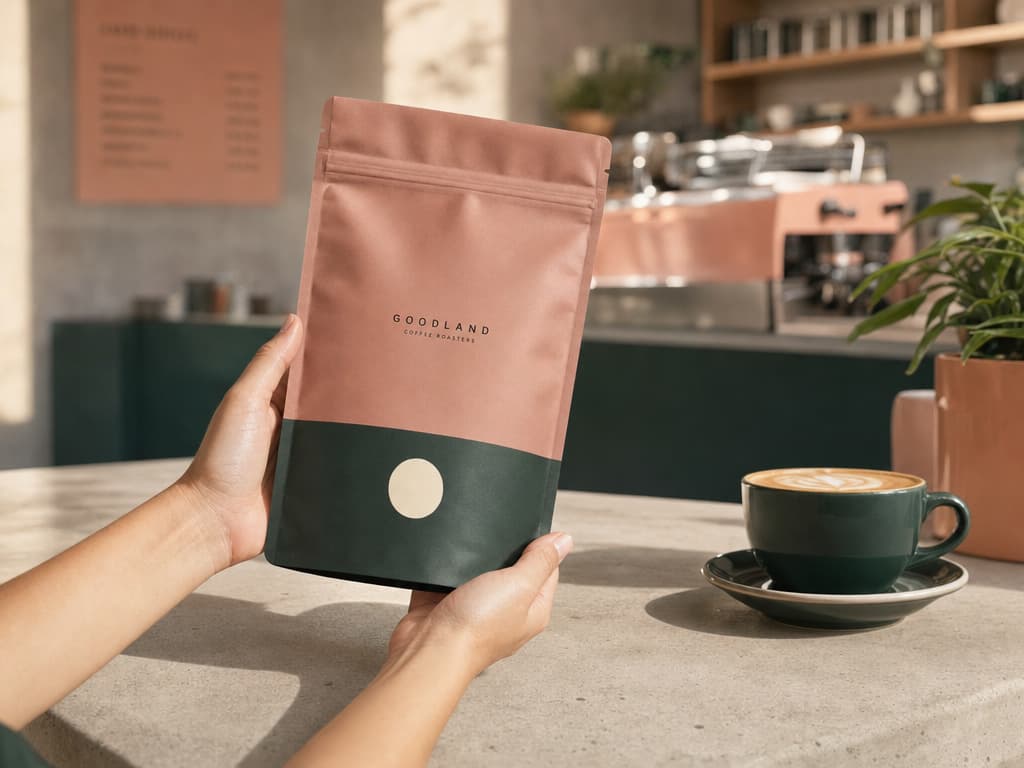
The look travels into the room, not just onto the product.
This is the same brand referenced into a café. The bag is the obvious part; look at what happened around it. The menu board, the counter front, the cup and the planter all landed in the same two colours, because the reference carried a palette rather than a logo. That is the difference between a brand kit and a sticker — one of them changes the set, the other one changes the packaging. Measured across all four assets, the green holds its hue inside about six degrees while its lightness moves with the light in the scene, which is what a real brand colour does when it is photographed rather than printed.
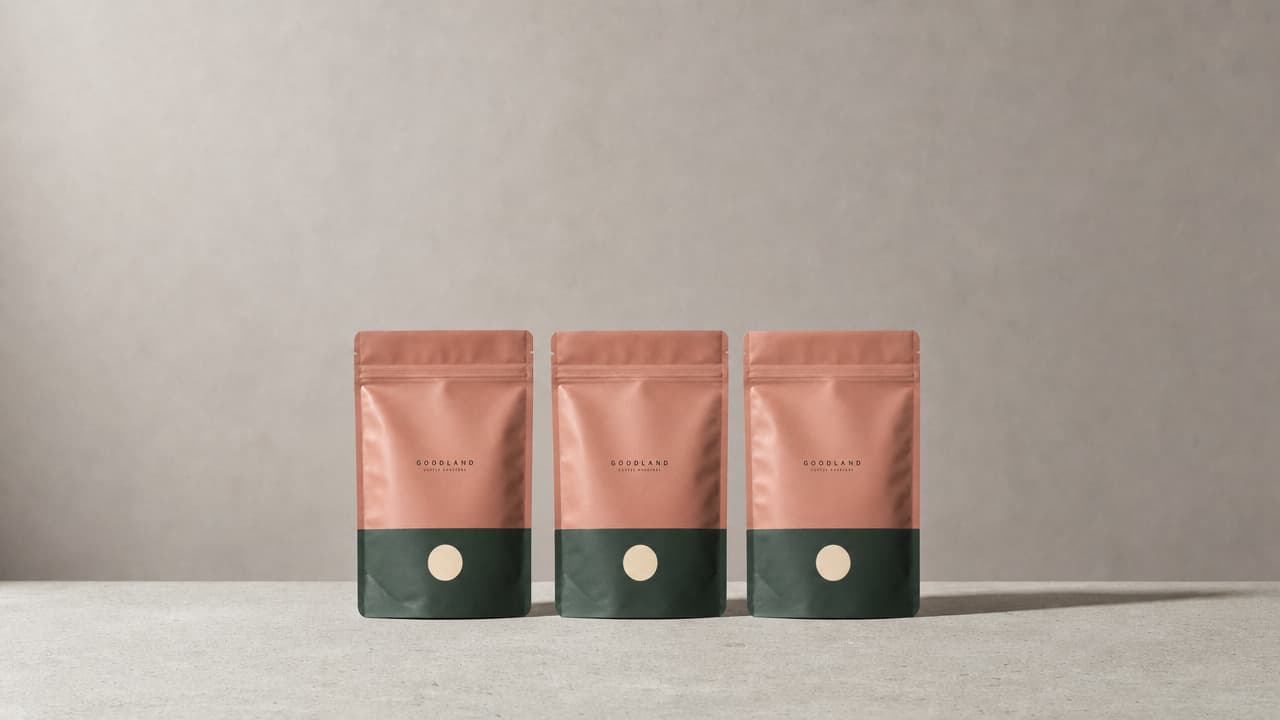
It named the brand, and then it kept its word.
Nothing in the instruction gave this company a name. The first bag came back reading GOODLAND COFFEE ROASTERS, and because every asset after it referenced that bag, the wordmark held — same letterforms, same tracking, same position relative to the colour block — through a tumbler, a card, a café and a shelf line-up. You do not have to accept what it invents, but whatever you keep becomes the thing the rest of the set obeys.
Every model that will hold a look.
Built for visual inference.
Serving video is a different problem from serving text — a single request can saturate a GPU, and none of the tricks that made language models cheap apply. Hedra's engine was built for exactly that workload.
Whichever model you choose — ours or anyone else’s — it runs on the same infrastructure, behind one key. Which is what makes a look enforceable rather than aspirational: the same reference goes to an image model for the packaging and a video model for the ad, in one chain, without the asset leaving the platform in between.
Generate with API or Agent
Build with the API
One key. Keep the reference, and send it with every request that has to stay on brand.
Define a look now.
No code — describe the brand, keep what comes back, and ask for the next asset.
FAQs
Assets that share a look, and a reference that keeps them sharing it. The useful output is not a document — it is the fact that the next image, ad or clip you ask for comes back in the same palette and proportions without being re-described. Everything on this page was made that way from a single bag.