What Is an AI Avatar? A Guide to AI Video Characters
Introduction
AI avatars have transformed what it means to create video content, turning ideas into polished production without cameras, crews, or costly post-production.
What once required studios, schedules, and significant budgets now happens in minutes from a laptop. This shift is not incremental, it's fundamental.
The numbers tell the story. The AI avatar market is expanding from $0.80 billion in 2025 to a projected $5.93 billion by 2032, registering a compound annual growth rate of 33.1% (MarketsandMarkets, 2025).
But what exactly is an AI avatar, and how does this technology work?
This guide breaks down everything creators, marketers, and businesses need to know about AI avatars in 2026; from the technology behind them to practical applications that are reshaping video content creation across industries.
What is an AI Avatar?
An AI avatar is a digitally generated character that uses artificial intelligence to simulate human-like speech, facial expressions, and movements.
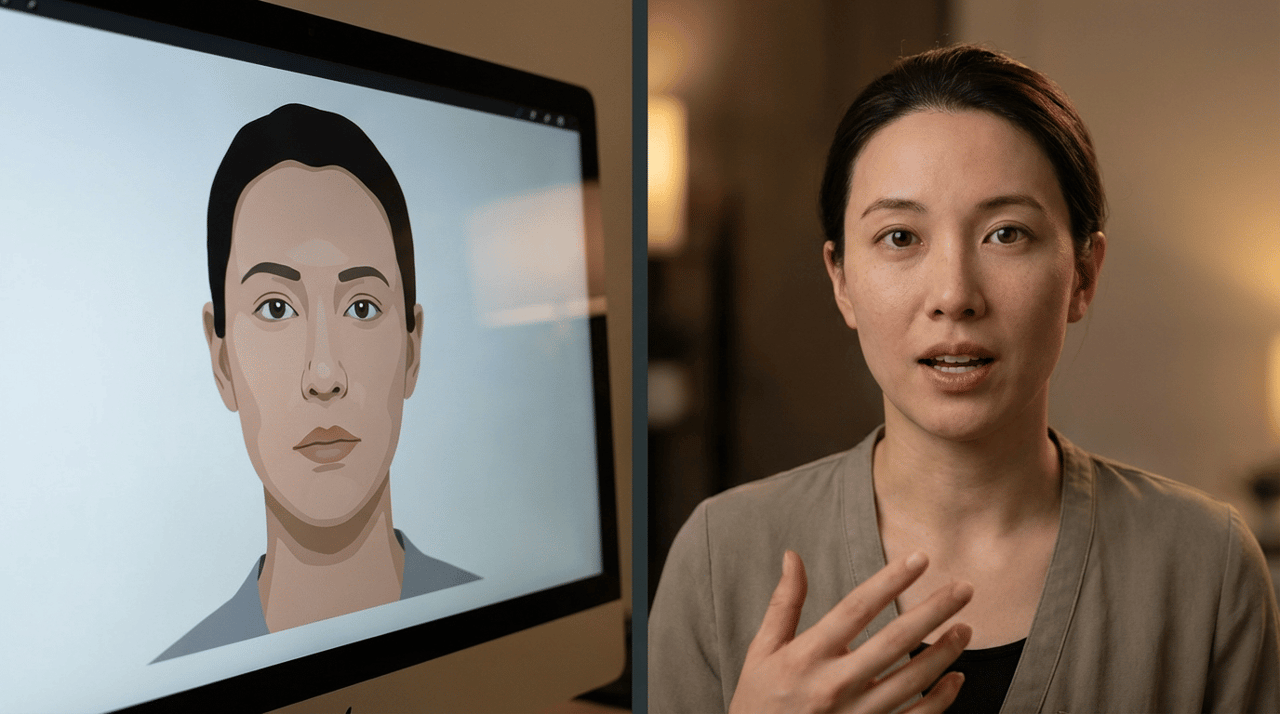
Unlike static images or simple animations, AI avatars are dynamic characters that can speak any script, display natural emotions, and adapt to different contexts, creating video content that feels authentic and engaging.
The key distinction lies in capability. Traditional avatars; profile pictures, gaming icons, or social media representations; are static or have limited pre-set animations.
AI avatars, by contrast, are powered by machine learning models that generate new content in real time. They do not replay pre-recorded clips.
They synthesize speech, animate facial features, and coordinate gestures based on text input you provide.
This difference matters for content creators. An AI avatar can deliver a product demonstration in English on Monday, then deliver the same content in Spanish, Mandarin, and German on Tuesday; all without additional filming, voice actors, or editing. The avatar maintains visual consistency while adapting language, tone, and context to different audiences.
AI avatars are not limited to speaking. They can display emotions through facial expressions, make natural gestures, and maintain eye contact with the camera.
Advanced systems can adjust tone, pacing, and emphasis to match the emotional context of the script. This creates video content where the character performs the message rather than simply reciting it.
The Technology Behind AI Avatars
AI avatars rely on three core technologies working together: neural text-to-speech synthesis, facial animation and expression modeling, and integrated AI processing.
Understanding these components clarifies how AI avatars generate realistic video content and why recent advances have made this technology accessible to mainstream creators.
Neural Text-to-Speech Synthesis
Modern text-to-speech systems use deep neural networks trained on vast datasets of human speech to synthesize natural-sounding voices in real time.
Rather than stitching together pre-recorded audio fragments, neural TTS generates speech by predicting the most likely audio output for given text. This approach captures tone, emotion, pacing, and emphasis; creating voices that sound expressive rather than robotic.
Neural TTS represents a complete shift from older concatenative methods and now captures over 83% of the TTS market share (Deepgram/Speechmatics, 2026).
The technology processes text through multiple stages: text normalization (expanding abbreviations and numbers), linguistic analysis (parsing sentence structure), phonetic conversion (breaking text into sound units), and acoustic modeling (generating audio waveforms).
End-to-End Neural Text-to-Speech converts text directly into speech using deep learning models that jointly learn linguistic features, acoustic patterns, and prosody (Picovoice, 2025).
This joint processing enables more natural and expressive speech synthesis compared to systems that process these elements sequentially.
Leading AI avatar platforms support 140+ languages and accents (MarketsandMarkets, 2025), allowing the same avatar to deliver content globally without hiring translators or voice actors.
The voice quality, prosody, and emotional range remain consistent across languages, a significant advantage for brands managing multilingual campaigns.
Facial Animation and Expression Modeling
AI systems analyze facial features and map key points; eyes, mouth, jawline, cheekbones; to create a digital framework for animation.
These systems then generate micro-expressions that sync with speech, predicting natural movements like blinking, head tilts, eyebrow raises, and subtle muscle shifts that humans make unconsciously during conversation.
The goal is not just accurate audio-driven facial animation. Advanced systems coordinate facial expressions with the emotional tone of the speech, creating character performance. When an avatar delivers good news, the eyes widen slightly, the smile broadens, and the head tilts forward with energy. When delivering serious information, the expression settles, the gaze steadies, and movements become more measured.
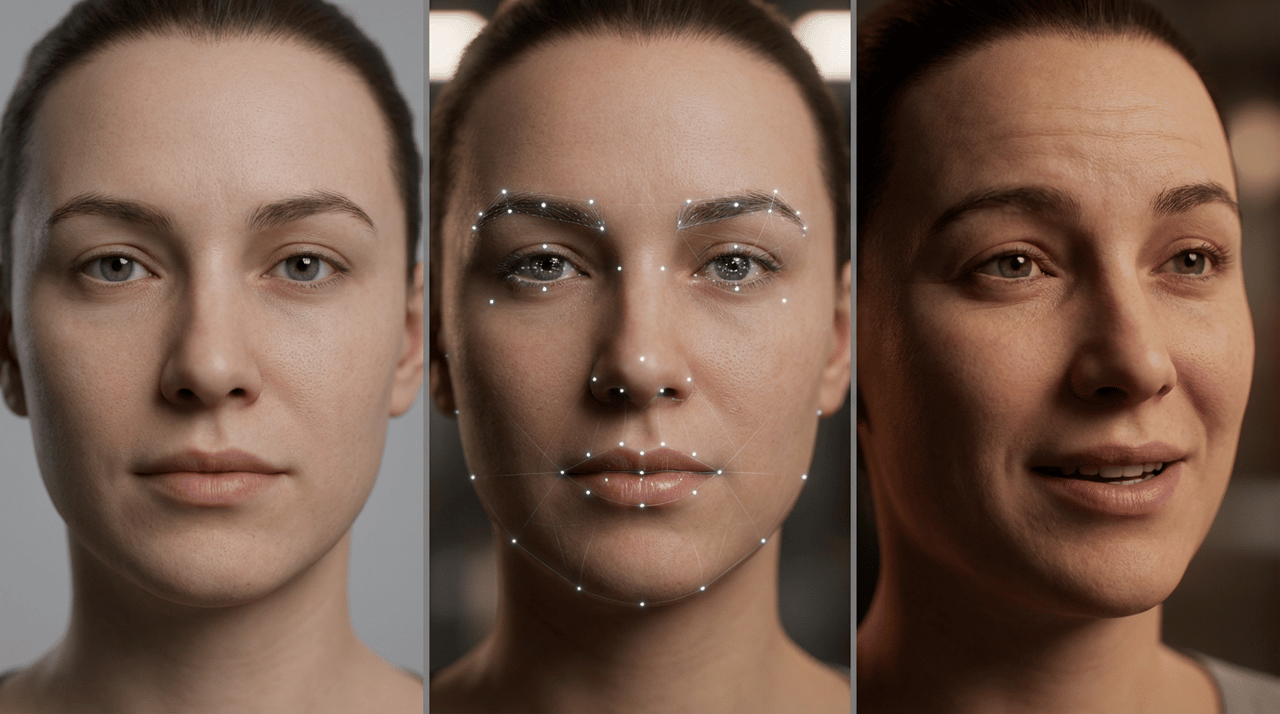
This level of coordination requires sophisticated AI models trained on thousands of hours of human video to learn how facial features move in relationship to speech patterns.
The result is a video where the character feels present rather than mechanically animated.
Omnimodal AI Processing
The latest generation of AI avatars relies on omnimodal foundation models; AI systems that process image, text, and audio simultaneously rather than sequentially. This architectural difference creates a meaningful improvement in output quality and character expressiveness.
Sequential processing works like an assembly line: generate audio from text, then animate the face to match the audio, then composite the final video.
Each step happens independently. Omnimodal processing, by contrast, jointly processes all inputs; image, text, and audio; at the same time.
The system understands the relationship between what's being said, how it's being said, and how the character should look while saying it.
This joint processing enables avatars to deliver natural facial expressions that sync perfectly with emotional tone in speech, creating character-driven video that feels genuinely expressive rather than mechanically animated.
When the script shifts from neutral explanation to enthusiastic emphasis, the avatar's expression, body language, and vocal energy shift together in a coordinated response; because the AI processed all these signals simultaneously.
Hedra Omnia is a unified world model built to natively understand and process the visual world. Hedra is building open core base models that partners can specialize through post-training with their own data and objectives. Omnia brings vision, text, and audio into a shared modeling approach, with a focus on objects, environments, motion, and how scenes change over time.
This technological evolution represents a fundamental shift in how AI avatars are created and what they can achieve.
The difference between sequential and omnimodal processing is the difference between audio-driven facial animation animation and character performance.
AI Avatars vs Traditional Avatars
Understanding the distinction between AI avatars and traditional avatars clarifies why this technology has become essential for content creators.
The differences extend beyond visual quality to fundamental capabilities.
Feature | Traditional Avatars | AI Avatars |
Interactivity | Static representation | Dynamic, real-time responses |
Adaptability | Fixed appearance and behavior | Learns and adapts to context |
Animation | Limited or pre-set movements | Natural, human-like expressions |
Voice | No speech or pre-recorded audio | AI-generated speech in any language |
Use Cases | Profile pictures, gaming icons | Video content, virtual assistants, training |
Personalization | Basic customization options | Fully customizable appearance, voice, behavior |
Creation Time | Minutes (simple design) | Minutes (with AI generation) |
Production Scale | One-off creation | Unlimited video generation from same avatar |
The key differentiators revolve around scalability and expressiveness.
Traditional avatars serve as visual identifiers; profile pictures, social media icons, or gaming characters with limited animation cycles.
They're created once and remain static or follow pre-programmed movements.
AI avatars generate new content continuously. The same avatar can deliver hundreds of different scripts, each with appropriate expressions, gestures, and vocal delivery. Update the script, regenerate the video, and the avatar performs the new content with coordinated speech and animation. No re-filming, no voice actor scheduling, no additional production costs.
Multilingual capability further separates AI avatars from traditional representations. The same avatar speaks 140+ languages without re-recording or hiring translators. A marketing team can create a product announcement in English, then generate versions in Spanish, Mandarin, German, and Arabic; maintaining visual brand consistency while reaching global audiences.
This scalability transforms content workflows. Marketing teams managing multilingual campaigns no longer coordinate separate film shoots or voice actors for each language. Educators creating course content can update lessons by editing scripts rather than re-recording entire modules. Sales teams can personalize outreach videos at scale without filming individual messages.
Why AI Avatars Are Transforming Content Creation
AI avatars solve core problems that have constrained video content creation for decades: cost, time, consistency, and scale. The benefits are measurable and documented across industries.
Dramatic Cost Reduction
Traditional video production carries significant expenses; crew, equipment, studio rental, voice actors, editing, and post-production. AI avatars eliminate these costs entirely. Companies report reducing production expenses by more than 80% when shifting from traditional filming to AI avatar generation (MarketsandMarkets, 2025).
The cost comparison is stark. A single video produced traditionally might require $5,000-$15,000 in crew, equipment, and editing costs. The same video generated with an AI avatar costs a fraction of that amount depending on platform and subscription tier. For businesses producing dozens or hundreds of videos annually, the savings compound rapidly.
The economics make video content accessible to businesses and creators who could not previously afford regular production.
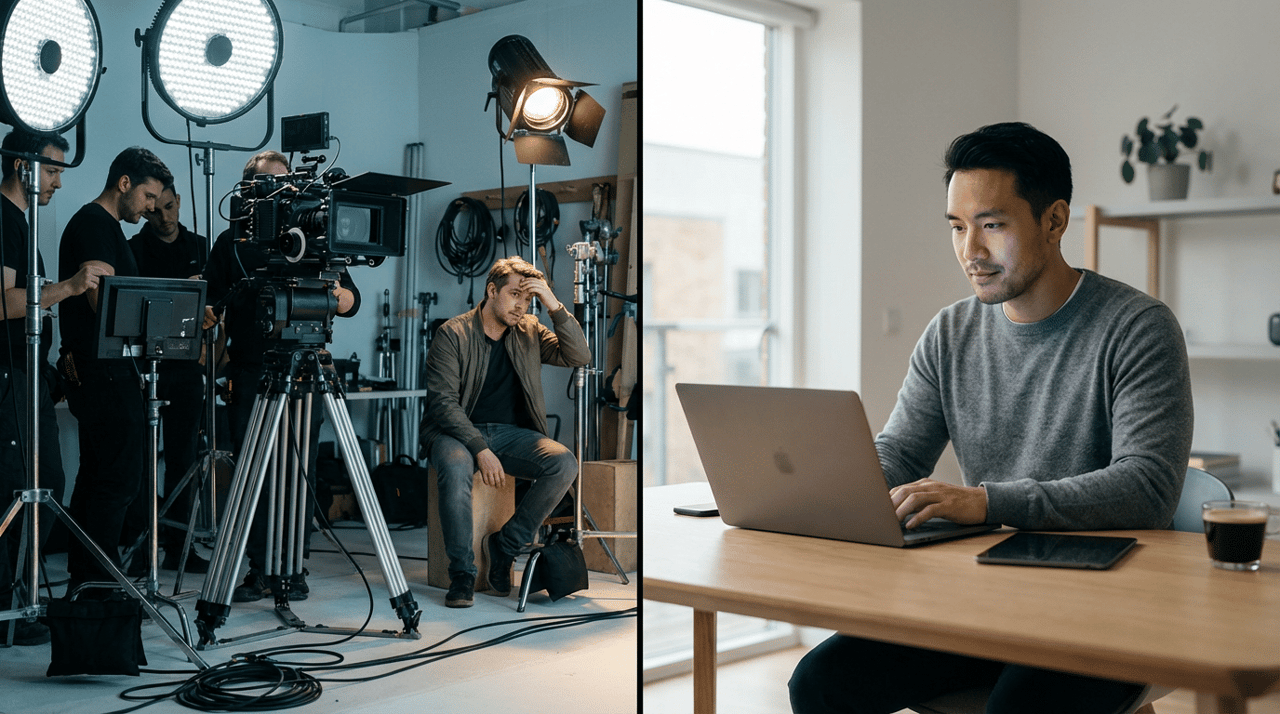
Production timelines shrink from days or weeks to minutes. Over 62% of marketers who use AI tools for video production report that text-to-video platforms help them cut content creation time by more than half (Zebracat, 2025).
This speed advantage eliminates scheduling bottlenecks, retakes, and coordination delays inherent to traditional filming.
The volume increase stems from removing technical barriers; no cameras to set up, no lighting to adjust, no editing software to master.
Write a script, generate the video, review the output, and publish.
Animation production sees similar gains. AI-generated animation tools cut production times by 68% compared to manual processes (Zebracat, 2025). Tasks that previously required days of keyframe animation now generate in minutes through AI-driven synthesis.
Scalability and Consistency
The same avatar maintains visual consistency across unlimited videos. Brand voice, appearance, and presentation style remain unified across all content; solving a problem that has plagued distributed teams and long-running campaigns where different presenters create variations in tone and style.
Multilingual content becomes seamless. Platforms supporting 140+ languages (MarketsandMarkets, 2025) allow brands to localize content without hiring translators or voice actors for each language.
The same avatar delivers the same message in Spanish, Mandarin, Arabic, and German with consistent visual branding and appropriate vocal delivery for each language.
Content updates no longer require re-filming.
Update a script to reflect a product change, regenerate the video, and publish; maintaining the same avatar, setting, and visual style.
This iterative capability means video content can evolve with product launches, feature updates, or market changes without incurring additional production costs.
Accessibility for Non-Technical Creators
Video production expertise is no longer a barrier. Modern AI avatar platforms provide intuitive interfaces where non-technical users can create professional video content. No knowledge of cameras, lighting, editing software, or audio mixing is required.
The learning curve flattens dramatically compared to traditional video production tools.
This democratization follows a familiar pattern. Just as Adobe Express made graphic design accessible to non-designers, AI avatar platforms are making video production accessible to non-videographers.
The data supports this democratization. Enterprise AI adoption reached 78% of organizations in 2024, up from 20% in 2017 (Stanford AI Index, 2025) demonstrating how AI tools have moved from specialized technology to standard business infrastructure.
AI avatars represent one application of this broader adoption trend.
These benefits have driven rapid uptake across multiple industries, each finding applications suited to their specific content needs and audience requirements.
Real-World Applications of AI Avatars
AI avatars are deployed across industries where video content drives engagement, education, or commerce.
Adoption patterns reveal how different sectors leverage the technology's strengths; scalability, consistency, multilingual capability, and cost efficiency.
Marketing and Advertising
Product demonstrations, explainer videos, and social media content represent the most common marketing applications.
AI avatars deliver product features, walk through use cases, and answer frequently asked questions without requiring on-camera talent or repeated filming for each new product. For a deeper look at how AI video is reshaping marketing workflows, see our guide to AI video for marketing and sales teams.
UGC-style content for ads has become particularly popular. Brands create authentic-feeling testimonials and recommendations at scale using AI avatars that match their target demographic.
The videos carry the informal, direct-to-camera style of user-generated content while maintaining production quality and messaging consistency that actual UGC cannot guarantee.
The adoption data reflects this trend. AI-generated voiceovers are used in 58% of marketing videos, while AI-generated avatars and digital actors appear in 36% of brand-produced videos (Zebracat/Gudsho, 2025-2026).
This represents a significant shift in how brands approach video content production.
Retail and e-commerce are a natural fit for AI video because teams can turn product imagery into demonstrations, localized variants, and personalized campaigns without producing every asset from scratch.
Product pages enhanced with AI avatar presentations see improved engagement and conversion compared to static images alone.

Education and Training
Corporate training videos, e-learning courses, and instructional content benefit from AI avatars' consistency and scalability.
Organizations can create standardized training that delivers the same information, tone, and pacing to every learner; eliminating variations that occur when different instructors deliver content.
Language learning applications use AI avatars to demonstrate pronunciation and conversational patterns across multiple languages.
The same system can teach Spanish, French, Mandarin, and Arabic with native pronunciation and appropriate cultural context; without requiring separate instructors for each language.
Course creators can update content easily.
When a process changes or new information becomes available, update the script and regenerate the affected modules. The avatar, setting, and presentation style remain consistent while the content reflects current information.
Customer Service and Support
24/7 virtual assistants powered by AI avatars handle routine customer inquiries, provide account information, and guide users through troubleshooting processes. The avatar maintains a friendly, helpful presence regardless of time zone or query volume; addressing a limitation of human support teams that face capacity constraints during peak periods.
Multilingual customer support becomes cost-effective.
The same AI avatar can assist customers in their preferred language without maintaining separate support teams for each language. This capability particularly benefits global companies serving diverse customer bases.
FAQ video libraries replace text-based help centers. Customers who prefer video explanations can watch AI avatar demonstrations of common processes rather than reading documentation. The videos can be searched, indexed, and updated as products evolve.
Internal Communications
Company announcements, sales enablement content, investor presentations, and HR onboarding videos use AI avatars to deliver consistent messaging across distributed teams.
Executives can script important announcements that are delivered by an avatar representing the company, ensuring every team member receives identical information.
Organizations scaling AI avatar usage across departments can explore Hedra's Teams plan for collaborative workflows, or enterprise-grade solutions for larger deployments.
Agencies creating pitch decks use AI avatars to walk prospects through proposals, case studies, and strategic recommendations.
The pitch remains consistent across all prospect meetings while allowing customization of specific examples or data points relevant to each prospect.
Content Creation and Social Media
YouTube videos, tutorials, TikTok content, and Instagram Reels increasingly feature AI avatars as hosts or presenters. Creators use avatars to maintain a consistent on-screen presence without appearing on camera themselves, solving privacy concerns or camera shyness while building a recognizable brand.
Podcast video versions use AI avatars to create visual content for platforms that prioritize video. Audio-first creators can generate video versions of episodes by having an AI avatar deliver the script while displaying relevant visuals or slides.
Consumer preferences support personalization. Over 55% of consumers prefer personalized AI-generated videos over generic content (Zebracat, 2025), indicating that well-targeted AI avatar content resonates with audiences when it addresses specific needs or interests.
With these diverse applications established across industries, the process of creating AI avatar content has become remarkably accessible to creators without technical backgrounds.
How AI Avatars Are Created
The creation process for AI avatars follows a straightforward workflow designed for accessibility. Most platforms abstract technical complexity behind intuitive interfaces, allowing non-technical users to generate professional video content in minutes.
1. Choose or Create Your Avatar
Select from a pre-built avatar library that offers diverse ages, ethnicities, styles, and professional contexts. Alternatively, upload a photo to generate a custom avatar that matches a specific appearance. Some platforms, including Hedra, support text-based generation where you describe the desired avatar and the AI creates it. For a step-by-step walkthrough of turning a still image into a speaking character, see our guide on photo-to-talking video.
Customization options typically include clothing, background settings, and visual style. Professional avatars might appear in office settings, while educational avatars might use classroom or studio backgrounds. The avatar serves as the consistent visual element across all videos you generate. You can also create your own custom character from scratch for a fully unique on-screen presence.
2. Write Your Script
Input the text content the avatar will speak. Scripts can range from short social media clips (30 seconds) to long-form educational content (30+ minutes). The system processes natural language; write as you would speak, and the AI generates appropriate vocal delivery.
Multilingual input is supported. Write the script in one language, then generate versions in other languages without rewriting. The avatar maintains the same visual presence while speaking different languages with appropriate pronunciation and vocal characteristics.
3. Select Voice and Language
Choose from a voice library that offers different ages, genders, accents, and tonal qualities. Some platforms allow voice cloning where you provide a sample of a specific voice, and the system generates speech that matches that vocal signature.
Language and accent selection determines pronunciation patterns and regional variations. British English, American English, and Australian English each carry distinct pronunciation and intonation; the system adapts accordingly.
Adjust tone, pacing, and emphasis if the platform provides granular control. Slow down technical explanations, add emphasis to key points, or insert pauses for dramatic effect.
4. Generate and Review
The AI processes the script and generates video. Processing time varies by platform and video length but typically completes in minutes. Short videos (under 2 minutes) often generate in under 60 seconds. Longer content may take several minutes depending on complexity. Choosing the right AI model for your project can affect both generation speed and output quality.
Preview the output. Check that facial expressions align with the script's tone, audio-driven facial animation is accurate, and the avatar's performance feels natural. Most platforms allow adjustments to timing, emphasis, or expression coordination.
5. Export and Use
Download the video in your preferred format and resolution. Common outputs include MP4 files optimized for different platforms; social media, websites, presentations, or broadcast.
Generate variations without starting over. Change a few sentences in the script, adjust the voice slightly, or modify the background; regenerate the video in minutes. The same avatar can produce unlimited variations, each tailored to specific audiences or contexts.
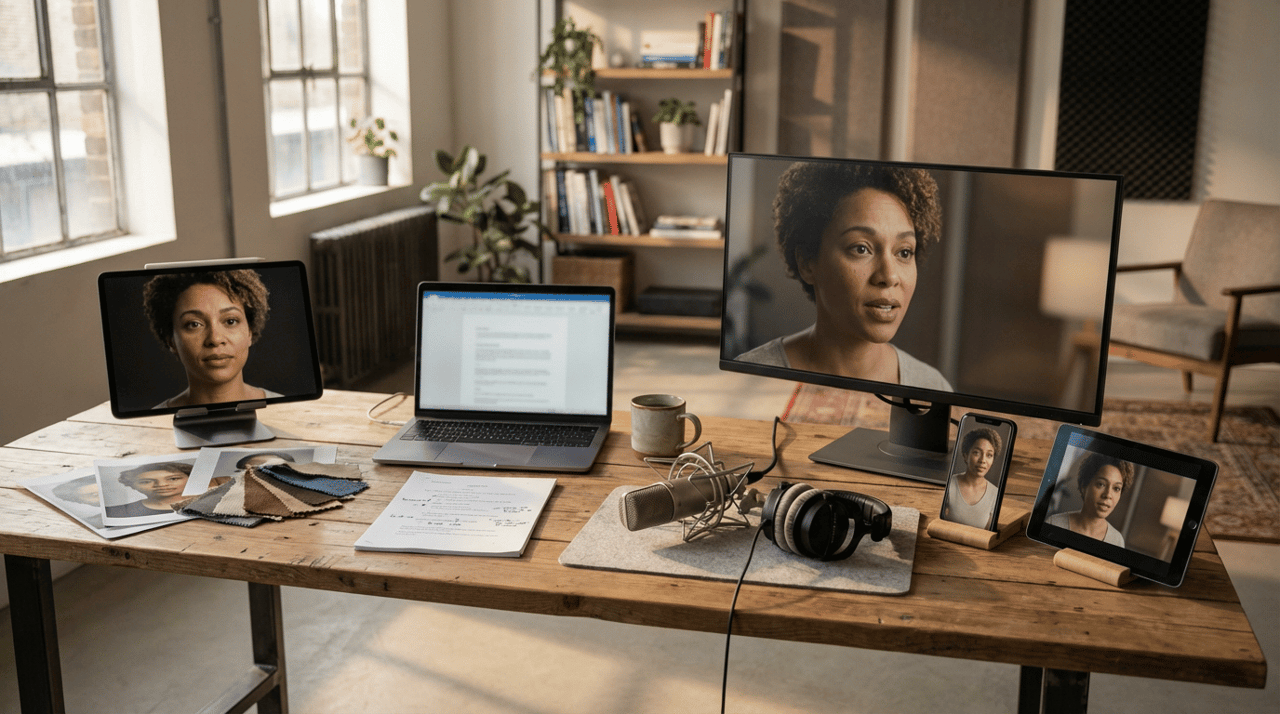
Modern AI avatar platforms bring the entire workflow into one studio, allowing creators to go from concept to production in minutes. Character-centric systems focus on expressive performance; ensuring avatars do not just speak words but deliver them with appropriate emotion and presence.
The accessibility of this process has democratized video production. Creators without filming equipment, editing expertise, or on-camera experience can produce professional video content that competes with traditionally filmed material in quality and engagement.
The Future of AI Avatars
AI avatar technology continues to evolve rapidly. Current development directions point toward increased emotional intelligence, real-time interactivity, and a fundamental shift from mechanical "talking heads" to character-driven performance.
Enhanced Emotional Intelligence
Future AI avatars will better understand context and emotional tone, adapting expressions and delivery based on audience or scenario.
Rather than simply matching expressions to word sentiment, advanced systems will recognize conversational context; delivering the same phrase differently depending on whether it follows good news, a question, or a clarification.
Facial recognition accuracy in video tools is expected to reach 97% by 2028 (Gudsho, 2026), enabling more precise mapping and animation of subtle facial features that convey nuanced emotions.
The technology will capture micro-expressions that communicate confidence, concern, enthusiasm, or empathy with greater fidelity.
Real-Time Interaction Capabilities
Live conversational avatars represent the next frontier; systems where AI avatars respond dynamically during real-time conversations rather than delivering pre-scripted content.
These applications will power interactive customer service, virtual meeting participants, and conversational interfaces where the avatar adapts responses based on what the user says or asks.
This shift requires integration with large language models that generate appropriate responses in real time, combined with low-latency avatar generation that produces facial animation and speech without noticeable delay.
The technical challenges are significant but solvable with current AI architectures.
Character-Driven Performance
The industry is moving toward character-centric AI avatars, systems where omnimodal processing allows characters to deliver not just accurate audio-driven facial animation but genuine performance.
This shift from mechanical speech to expressive storytelling represents the next evolution in AI video generation.
Audio-conditional animation coordinates facial expressions with the emotional tone and rhythm of speech rather than simply matching mouth movements to phonemes.
When the voice rises with excitement, the eyes widen, the posture shifts forward, and the expression brightens, all coordinated through joint processing of audio and visual elements.
Creators are already experimenting with advanced techniques like motion control and cinematic camera angles to push character-driven video even further.
This approach creates characters with presence. Rather than avatars that recite information, the technology enables digital performers that engage audiences through emotional resonance and authentic delivery. The distinction matters for content that aims to persuade, inspire, or connect, not merely inform.
Increased Accessibility and Democratization
PC-based AI generation is closing the gap with cloud platforms. PC-class AI models improved accuracy by nearly 2x in 2024, with the number of users downloading PC-class models growing tenfold (NVIDIA, 2026).
This shift enables creators to generate AI avatar content locally without relying on cloud services, reducing latency and subscription costs.
Lower costs and faster processing will accelerate adoption.
As technology becomes more efficient, the computational resources required to generate high-quality AI avatar content decrease; making the tools accessible to smaller businesses and individual creators operating on limited budgets.
The trajectory points toward a future where creating video content with AI avatars is as common as creating graphics with design tools. The technology will feel less like a specialized capability and more like standard infrastructure for digital communication.
Responsible Use of AI Avatars
The accessibility and power of AI avatar technology demand thoughtful consideration of ethical use, transparency, and audience trust. As adoption accelerates, responsible deployment becomes essential for maintaining credibility and avoiding misuse.
Transparency Matters
Audiences value authenticity. While 98% of consumers agree that authentic images and videos are pivotal in establishing trust with brands (Getty Images VisualGPS Report, 2024), AI-generated content can still build trust when deployed transparently. Disclose when content uses AI avatars rather than human presenters.
This transparency does not diminish effectiveness. Consumer trust in AI tools is gradually improving; 43% of consumers trust information provided by AI chatbots or tools in 2025, up from 40% in 2024. Among active AI tool users, trust jumps to 68% (Attest Consumer AI Report, 2025). People are comfortable with AI-generated content when they know what they are viewing.
Avoid deceptive applications. AI avatars should enhance communication, not mislead audiences about who is speaking or what is real. Clear disclosure builds long-term trust that outweighs any short-term advantage gained through ambiguity.
Consent for Voice and Likeness
Use only authorized voices for cloning. Creating AI avatars that mimic real people without consent raises ethical and legal concerns.
Respect intellectual property rights and personal likeness protections. Obtain explicit permission before generating avatars based on specific individuals.
Follow platform guidelines and local regulations regarding AI-generated content, voice cloning, and digital likeness.
Legal frameworks are evolving, and compliance requirements vary by jurisdiction. Stay informed about applicable rules.
Quality and Accuracy
AI avatars speak the scripts you provide. Ensure content accuracy before generation, the avatar will deliver whatever text you input with confident delivery regardless of factual accuracy. This capability makes verification critical.
Maintain brand standards. Review outputs before publishing to confirm that tone, messaging, and presentation align with brand guidelines. While AI generation is fast, quality control remains a human responsibility.
At Hedra, responsible AI deployment is core to our mission. We believe AI avatars should empower creators to tell their stories more effectively; not replace human creativity or mislead audiences. Transparency, consent, and quality are the foundations of trust in this technology.
With these principles in mind, AI avatars become powerful tools for authentic storytelling at scale, enabling creators to reach global audiences with consistent, high-quality video content that maintains brand integrity while adapting to diverse contexts and languages.
Frequently Asked Questions
Do I need technical skills to create AI avatars?
No technical skills are required to create AI avatars. Modern platforms provide intuitive interfaces where you upload an image or choose from a library, input your script, and generate video in minutes. The entire process is designed for accessibility, allowing anyone to create professional video content without video production experience.
How realistic are AI avatars in 2026?
AI avatars in 2026 have reached near-photorealistic quality. In blind testing, 73% of viewers cannot distinguish high-quality AI-generated video from traditionally filmed content (Clippie, 2025). Modern omnimodal AI systems produce natural facial expressions, emotional speech, and character-driven performance that feels authentic and engaging.
Can AI avatars speak multiple languages?
Yes, AI avatars support 140+ languages and accents (MarketsandMarkets, 2025). The same avatar can deliver identical messages in multiple languages without requiring separate recordings or voice actors. This multilingual capability makes global content distribution seamless and cost-effective.
How much do AI avatar platforms cost?
AI avatar platforms range from free tiers with basic features to enterprise plans with advanced capabilities. Most platforms use subscription or credit-based pricing, with costs significantly lower than traditional video production.
Are AI avatars replacing human content creators?
AI avatars are tools that empower creators, not replacements for human creativity. They handle the technical production aspects; filming, editing, voice recording; while creators focus on strategy, messaging, and storytelling. The technology democratizes video creation, making professional production accessible to individuals and businesses that could not previously afford it.
What is the difference between character-centric and generic AI avatars?
Character-centric AI avatars use omnimodal processing to deliver expressive performance tied to emotional speech tone, creating characters with personality and presence. Generic AI avatars focus primarily on accurate audio-driven facial animation without emotional depth. Character-centric systems produce more engaging, authentic video content that resonates with audiences because the avatar performs the message rather than mechanically reciting it.
Can I create a custom AI avatar of myself?
Yes, most AI avatar platforms allow you to create custom avatars from photos or video recordings. You can generate digital versions of yourself that maintain your likeness while speaking any script you provide. This is particularly useful for personal branding, consistent video presence, and scaling your content output without appearing on camera repeatedly. Our image-to-video guide walks through the process of turning still images into dynamic video content.
How long does it take to generate an AI avatar video?
Generation time varies by platform and video length, but most AI avatar videos are produced in minutes depending on the length of video you’re generating and the specifics of the model you’re using. Simple videos under 2 minutes often generate in under 60 seconds.
Key Takeaways
- AI avatars are digital characters powered by artificial intelligence that generate human-like speech, facial expressions, and movements; transforming video content creation from a complex production process into a simple, scalable workflow accessible to anyone.
- The AI avatar market is experiencing explosive growth, expanding from $0.80 billion in 2025 to a projected $5.93 billion by 2032 at a 33.1% CAGR (MarketsandMarkets, 2025), driven by demand for cost-effective, scalable video production across industries.
- Character-centric AI avatars represent the next evolution, using omnimodal processing to deliver expressive performance rather than mechanical speech, creating video content that engages audiences through authentic character-driven storytelling that feels genuine rather than synthetic.
- Responsible use builds trust, with transparency about AI-generated content and ethical practices essential as 98% of consumers value authenticity in brand communications (Getty Images Trust Report, 2025). Disclosure and quality control maintain audience confidence.
Summary
As AI avatar technology continues to advance, the question is no longer whether to adopt this technology but how to use it strategically. Character-centric platforms like Hedra are pioneering omnimodal AI systems that put expressive storytelling at the centre, turning ideas into impact through video that truly connects with audiences.
The democratization of video creation has arrived. What once required studios, crews, and significant budgets now happens in minutes with beautifully simple software. The barriers that prevented good ideas from becoming finished content have fallen.
What will you create?
Explore Hedra Studio and go from concept to production in minutes. Start free at hedra.com
Related Reading:
- The Complete Guide to AI Audio-driven facial animation: Create Talking Characters from Still Images
- AI Video Trends and Social Media Trends Shaping Content Creation in 2026
- Choosing the Right AI Video Model for Your Creative Vision